arrow_backBack to Home

Latest Articles

Thoughts on writing, creativity, and the stories behind the stories. All articles originally published on Medium.

Collections

All articles

What I Learned Promoting My Book

What I Learned Promoting My Book

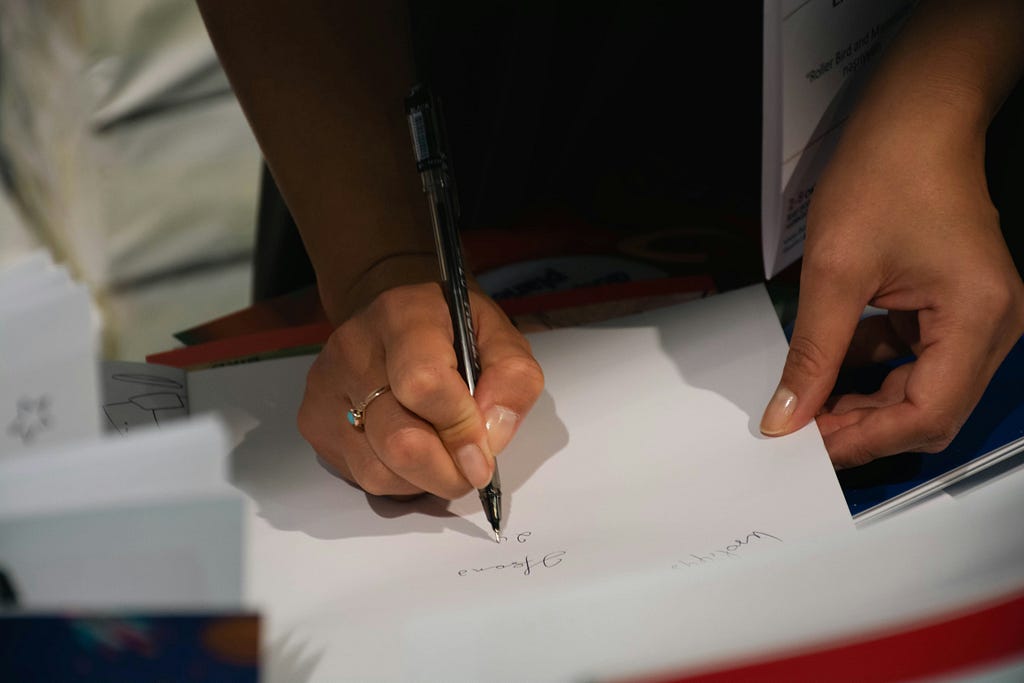
My writing paused this past week to promote my historical fiction novel. Here are a few things I learned: Promoting is harder than writing.Be prepared. Have a water bottle. Offer some freebies like bookmarks or saltwater taffy.Independent bookstore owners are wonderful people.Fellow authors are supportive. The three of us wrote very different kinds of books about the same event. Mine, of course, was historical fiction. One was a photo essay of the same event from 50 years ago. The third explored the politics and power that shaped the event. Yet, the three of us were able to support and help one another.The event, the failure of the Teton Dam in Eastern Idaho on June 5, 1976, was and still is a major event for the region. For people outside the region, it is hardly remembered.Don’t scare off the bookstore’s customers by sitting right inside the front door of the shop. Leave an escape route for those not interested in your “dam books”.Have something witty to write when you sign the book. If not, sign your name and go on.You meet interesting people, even if they don’t buy your book.Out of nowhere, people you know show up at your book signing.When you’re done, get back to your next project. Time waits for no one.

Read What I Learned Promoting My Bookarrow_forward
Dangerous Memories

Dangerous Memories

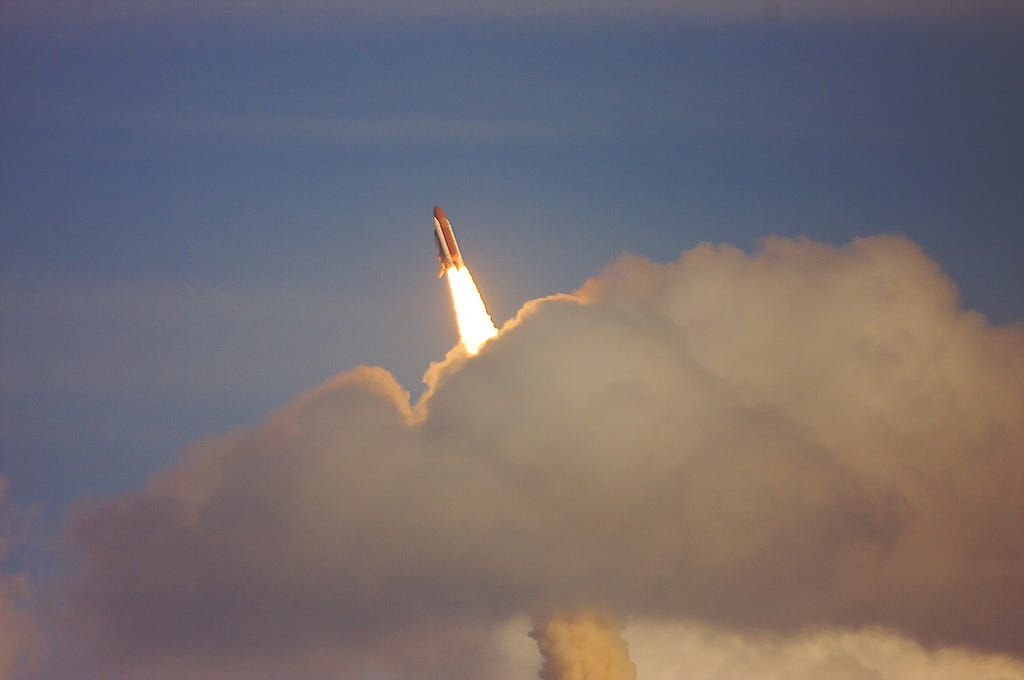
Chauncey strode toward the two blue silos. The war ten years earlier, and the pandemic that followed, assured the demise of the dairy farm, but the structures still towered into the sky. Upon reaching the base of the south silo, Chauncey gripped the ladder and began to ascend. He climbed past the rust streaks and blistered paint that marred the side of the silo and reached the platform. Stepping off the ladder, he paused to catch his breath. His eyes rested on the manned capsule atop the modified military rocket. Crossing the platform to the spacecraft, he poked his head inside. “Do you have the memory pods?” he asked, looking at the two occupants. “Yes, we have them.” The helmet muffled Cranston’s voice. “They are stowed in the center console.” Cranston gave a thumbs up, but the woman sitting in the seat beside him pulled off her helmet and shook her head. “They’re just USB drives. That is not what I expected memories to look like.” Chauncey chuckled, “Did you expect a piece of brain tissue, Silvia?” Silvia shuddered. “Of course not,” she said. “I didn’t know somebody could digitize human memory.” “You can thank Carver for that,” Chauncey said with displeasure. “Now, are you ready to go?” Chauncey suspected the memories had little to do with Sylvia’s concerns. “Not yet,” Silvia said as she shifted in her seat. “What if we don’t make it to space?” “We’ve been over this before. That’s what the parachutes are for,” Chauncey said. “Remember, you are not the first to take this ride.”

Read Dangerous Memoriesarrow_forward
Goal Setting

Goal Setting

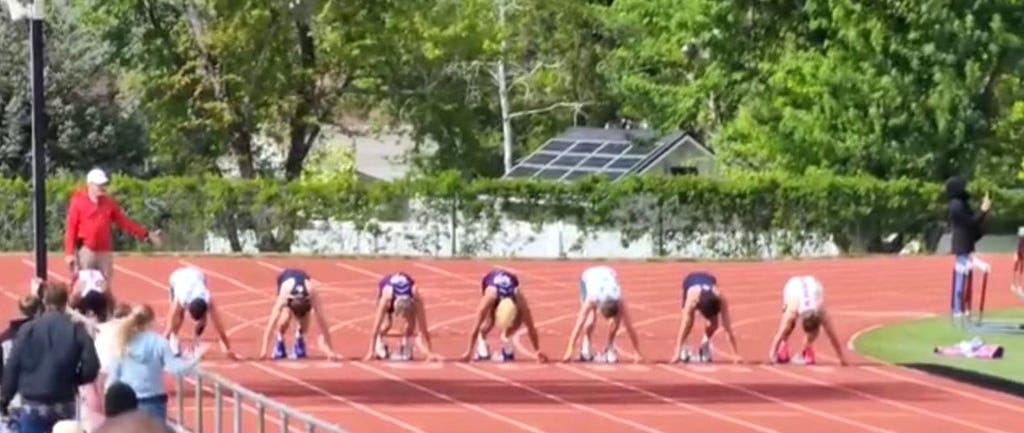
Every writer encounters those daunting moments, sometimes multiple times a day, when the words won’t flow onto the page. The novel, begun with enthusiasm five years ago, now looms ominously overhead, much like the fabled sword of Damocles. The story, once eagerly promised to the writers’ group, remains frustratingly elusive. We share a common struggle as we stand together in this familiar terrain of creative blockades. I, too, have faced the silent mockery of the page, the story that resists completion despite years of nurturing. In these challenging times, what tools do you turn to? What strategies do you employ to coax the words from the recesses of your imagination? Now, let’s shift our focus from the solitary struggle of the writer to an inspiring narrative of athletic determination that has inspired me. For the past three years, I’ve been following the progress of a confident young man — a sprinter on his high school track team. Annually, he has secured his spot at the state championships in the 100-meter. Despite commendable performances, the finals eluded him — until this year. This season, he not only clinched a medal, placing 7th statewide in his classification with a blistering 10.88 seconds, but expanded his repertoire, qualifying in the 200-meter dash, the 4 x 200-meter relay, and the 4 x 100-meter relay. His relentless pursuit led to a new school record in the 100-meter dash, clocking in at 10.79 seconds, shattering a decade-old record. Moreover, his 200-meter relay team repeatedly broke and re-established the school record.

Read Goal Settingarrow_forward
The Hard Land Part 33

The Hard Land Part 33

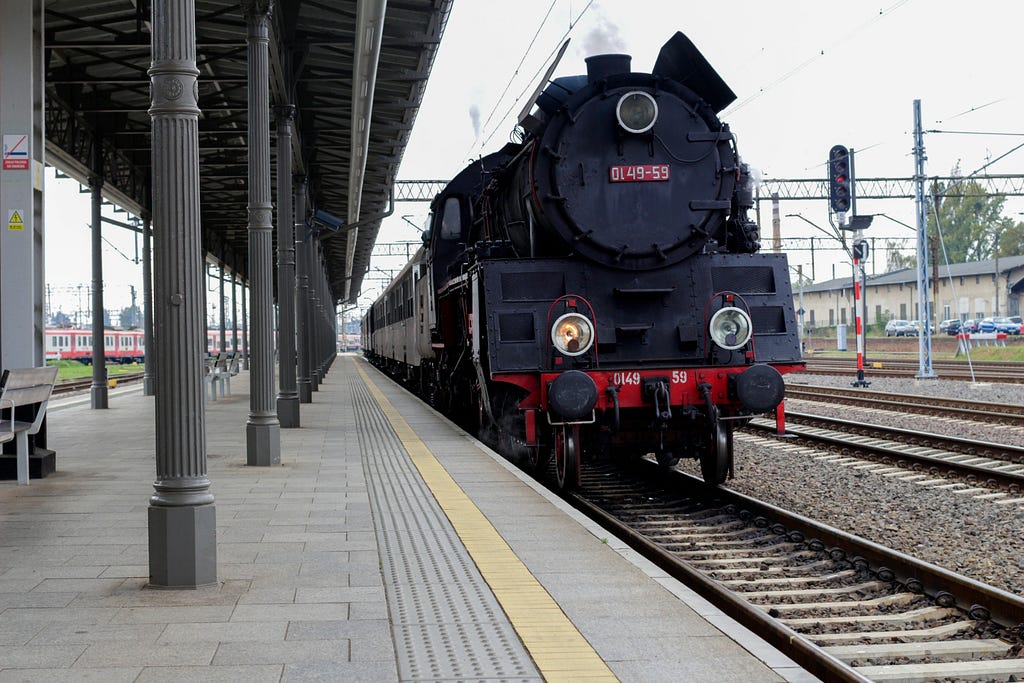
Frank lashed his whip across the backs of the team, hurrying the horses into a fast trot as the train whistle echoed across the Bear River north of Cache Junction. Charlotte wrapped her right arm tighter around her baby sister and grabbed the wagon seat with her left hand. In the wagon box, Matilda Benson cradled Anna’s head in her lap. A moan escaped Anna’s lips, soft but loud enough for Frank to hear. It pierced him to his core, but the train was close, and Anna had to be on it. There was no time to waste. Frank rushed to the ticket window as the train rattled across the bridge. “I need four tickets to Salt Lake City.” “Eight dollars,” the clerk said. Frank slid the money through the slot and took the tickets. He returned to the wagon, lifted Anna from the box, and carried her into the depot. “All aboard!” the conductor shouted over the hiss of the steam from the engine. Frank carried Anna into the car. Charlotte followed, both arms wrapped around the baby. “Where’s Matilda?” Frank asked, frantically looking around the railcar. He breathed a sigh of relief when he saw her pushing her way through the crowd toward them. “I sent a telegram to my daughter in Salt Lake City. We’ll need someone to meet us at the station,” Matilda explained. Frank sank back into the seat beside Anna. “Thank you, Sister Benson. You are a Godsend.” Matilda smiled and patted his shoulder. “Get some rest,” she said. “You’ll need it.” She turned to Charlotte. “Let me hold Helen for a while so you can rest too.”

Read The Hard Land Part 33arrow_forward
The Hard Land-Part 32

The Hard Land-Part 32

Frank dragged himself slowly across the yard toward the house, the weight of recent days heavy on his shoulders. Anna had not recovered from Helen’s birth, spending most of her time in bed while eleven-year-old Charlotte took over the household chores. She washed clothes, prepared meals, and spent time with baby Helen. Frank knew that this was not sustainable. He needed to get medical attention for Anna beyond the help of the local doctor. He pushed the door of the house open, his eyes turning quickly to the bedroom where Anna lay. He crossed the room and looked in on Anna. He saw the sweat beaded on her forehead. He didn’t need to ask to know she was not feeling better. His shoulders slumped. Should he make another trip to bring the doctor? The last two visits had proven useless. The doctor gave Anna medicine to bring the fever down, but once it wore off, she was as ill as ever. Frank felt utterly helpless in a world he knew nothing about. “Papa, do you want supper?” Charlotte asked, her small frame pressing against the stove where a pot of stew simmered. Frank sighed. “Yes,” he said, dropping into a chair. He was not hungry, but he had to keep his strength up. With Earl spending all his time working on his house, the burden of the farm added to the weight Frank carried. Charlotte set a bowl of the steaming stew in front of him. He picked up his spoon and stirred the thick soup, his mind elsewhere.

Read The Hard Land-Part 32arrow_forward
The Hard Land-Part 31

The Hard Land-Part 31

The sun’s feeble light crept over the eastern horizon, casting long shadows over the hard-packed ground. Earl flung a bundle of hay over the fence, the calves’ plaintive cries echoing through the already stifling morning air. His hands, calloused from hard labor, wiped the sweat from his brow as he surveyed the farmstead. And there, Joseph Carter and his two sons emerged from the barn’s weathered side. Their faces etched with determination, they stood before Earl, their eyes mirroring the weariness of countless miles traveled. But what struck Earl most was the absence of horses. He squinted toward the road, expecting to see three steeds tethered there, but all he found was the dusty expanse stretching into the distance. “Where are your horses?” Earl asked, his voice a mixture of curiosity and disbelief. His flannel shirt faded and frayed; Joseph shifted uncomfortably, a touch of crimson sneaking past his collar. “Ain’t got none.”. “Did you walk from Franklin this morning?” Earl’s skepticism danced on the edge of his words. “That’s quite a distance to cover at this early hour.” Franklin lay seven miles away by the road, maybe a little less if one dared to traverse the tree-shrouded hillsides. Joseph nodded, his gaze unwavering. “Started early, we did. Didn’t wanna be late.” “And your chores? “Earl probed gently, wary of prying. “Livestock to tend, I reckon?” Joseph’s reply came without hesitation. “A cow, two pigs, a goat, and half dozen chickens,” Joseph said. “Nothin’ the wife and little ones can’t manage.” His hands rested in the pockets of his patched overalls, eyes locked with Earl’s. “What do you want us to do?”

Read The Hard Land-Part 31arrow_forward
The Hard Land-Part 30

The Hard Land-Part 30

With a grunt of satisfaction, Earl hoisted the last rock into the foundation of the house he was building. There was one thing: the farm had a lot of rocks. Maybe he should consider building the whole house out of stone. He stood and wiped the sweat from his brow, feeling pride in his work. He saw Harry Nash’s wagon approaching in the distance, kicking up dust on the unimproved road. Lumber of various sizes and shapes bounced up and down with each jolt as the wagon struggled over the rocky terrain. Someday, he would have to build a better road. Earl waved at Harry, glad to see the lumber arrive on time. The harvest would begin in a few days; if Harry hadn’t delivered it now, it would have been fall before he could continue working on the house. For now, construction was still on schedule for completion before winter. Earl whistled a jaunty tune as he crossed the lot and helped Harry unload the wagon. When the two men had the lumber stacked neatly, Earl thanked Harry for the prompt delivery and counted out the payment. “I’m much obliged,” Harry said, tucking the money into his wallet. “I take it you won’t be helping out much with harvest this year.” Earl shook his head. “This house is my focus for the next few months. Elizabeth and I need to get out of the tiny cabin. It isn’t fit for winter, and we don’t want to move back in with Frank and Anna.”

Read The Hard Land-Part 30arrow_forward
Writing for the Love of It

Writing for the Love of It

The back-to-school sales started with the sidewalk sale on rodeo weekend. Store windows painted with rodeo scenes — a clown in heavy make-up peeking out of a barrel, a cowboy flying from the back of a Brahma bull, a twisting, turning bronco, were obscured by piles of merchandise. Along Main Street, racks of clothing displayed the latest trends and colors. On the tables, new shoes and the most popular comic character lunch boxes awaited eager buyers. Cash registers were set up outside the stores to facilitate transactions so patrons didn’t need to enter the crowded shops to make purchases. They’d all be cleared before parade time but added to the festive atmosphere. But none of the sidewalk sale items appealed to me, so while Mother fussed over clothes for my brother and two sisters, I went straight to King’s Department store, where stacks of notebooks with gold covers, tightly spiraled wire bindings, and clean, mark-free pages tempted me to fill them with stories and ideas. I was fascinated by the courage and adventure of the Mercury astronauts, so I wrote my first story as a short report about John Glenn and his three-orbit space flight. I admired the speed and innovation of Craig Breedlove, so I followed up with another story about him and his Spirit of America rocket-powered car, which failed to set a world land speed record in 1962. My third-grade teacher praised both reports. I was hooked. Over the next few years, I filled pages of notebooks with stories: highly imaginative fan fiction, deeply expressive poetry, utterly captivating short stories, and a naïve but ambitious spy novel (or so I believed). Yet, I concealed most of my creative writing under my mattress, the weight flattening the spirals of the notebooks like pancakes, unsure if I dared allow anyone to read it and counter my opinion.

Read Writing for the Love of Itarrow_forward
The Hard Land-Part 29

The Hard Land-Part 29

Thomas stepped off the train at Cache Junction, and the heat of July swept over him. He pushed back his straw hat and walked the length of the platform, searching for Earl among the passengers and porters. He spotted his brother’s black Stetson hat and waved. Earl drove the wagon alongside the freight platform where Thomas’s trunk was waiting. The two men slid the trunk into the wagon with some effort and climbed onto the seat. “How was the train ride?” Earl asked, cracking the whip. “Long and boring,” Thomas said, “but I’m glad to be here.” The wagon rattled along the dirt road, leaving the station behind. Earl kept the team rushing along the road, reaching Franklin by early afternoon. Earl glanced at his brother. “You don’t mind if we stop at Sparrow’s Dry Goods store to pick up a few things, do you?” The wagon rolled down Franklin’s main street, alive with people and horses. Thomas could hear hammering from the blacksmith shop and smell the leather from the saddlery. “Nah. Take your time.” He jumped off the wagon and strolled along the street while Earl shopped. He remembered his first trip here. On this street, he’d seen Amanda Nash from a distance, like a ray of sunshine on a cloudy day. Now, he worked for her father and would see her often. What a difference a year makes. Earl looked at his brother with a sly grin. “How are things with Amanda?” Thomas felt a surge of warmth in his chest and a flush on his face. Had Earl read his mind? He tried to sound casual and said, “Good, I think. We’ve been writing regularly, and she says Harry still wants me to be a foreman on the threshing crew.” He hoped Earl would drop the subject but knew he wouldn’t.

Read The Hard Land-Part 29arrow_forward
The Hard Land-Part 28

The Hard Land-Part 28

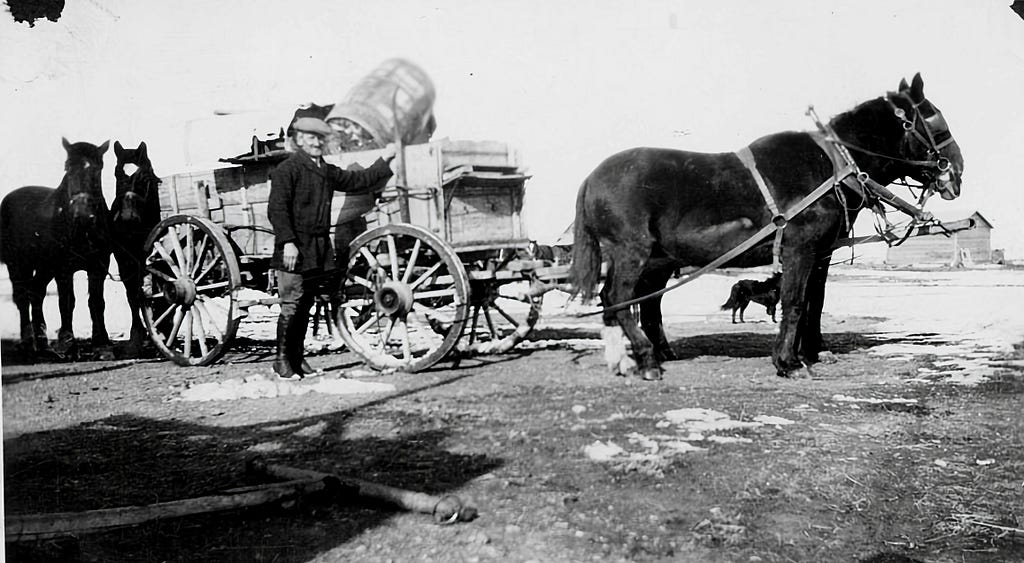
Frank plunged the tines of the Jackson fork into the pile of hay and motioned to his son Hank. Hank kicked the mare in the flanks, and she began to move forward. With its load of hay, the fork started to rise, and Frank let the trip rope slip through his gloved hands. He watched the hay soar through the air as Earl pulled on the guide rope, guiding the fork into just the right place on the growing haystack. At Earl’s signal, gave a tug on the trip rope and the pile of hay fell into place where, with little effort, Earl used his pitchfork to keep the stack level. Frank motioned for Hank to back the mare up and the fork dropped down for another load. Frank straightened from pushing the fork into the hay when he saw Charlotte running from the house, her dress flapping in the wind. He looked up in the sky to see if the sun was directly overhead signaling lunchtime, but it was barely halfway up the sky. Something was wrong. “Mama says you need to come to the house right now,” Charlotte gasped, out of breath from running. Frank jumped from the wagon and sprinted to the house, outpacing Charlotte’s short legs. When Charlotte reached the house, Frank was kneeling beside Anna’s bedside, holding her hand. He turned to Charlotte, “Get Elizabeth. I’m going for the doctor.” Frank ran back to the barnyard where Hank sat on the horse. “Let me have the mare,” Frank said, helping Hank down from the saddle.

Read The Hard Land-Part 28arrow_forward